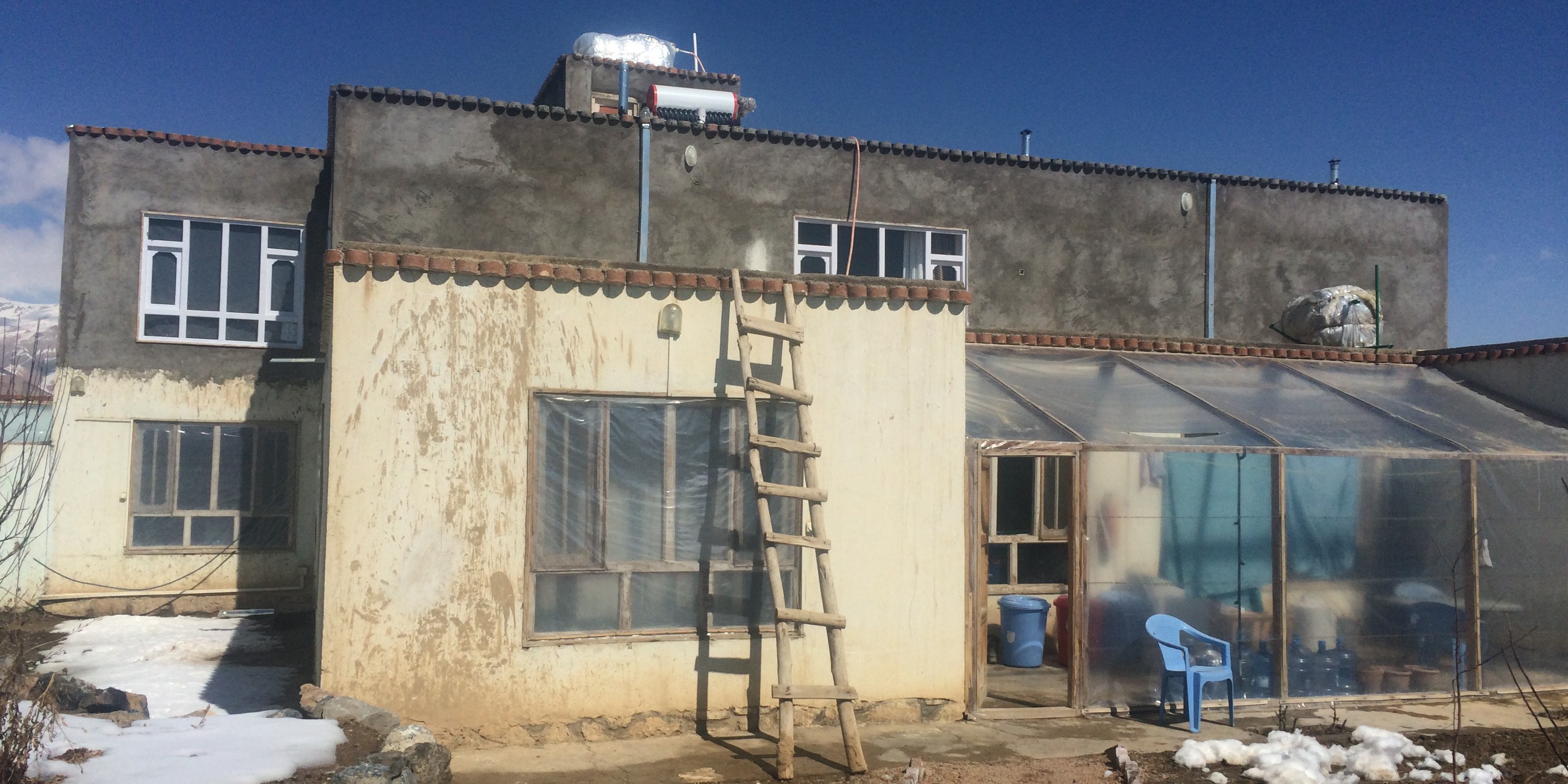
bukhari
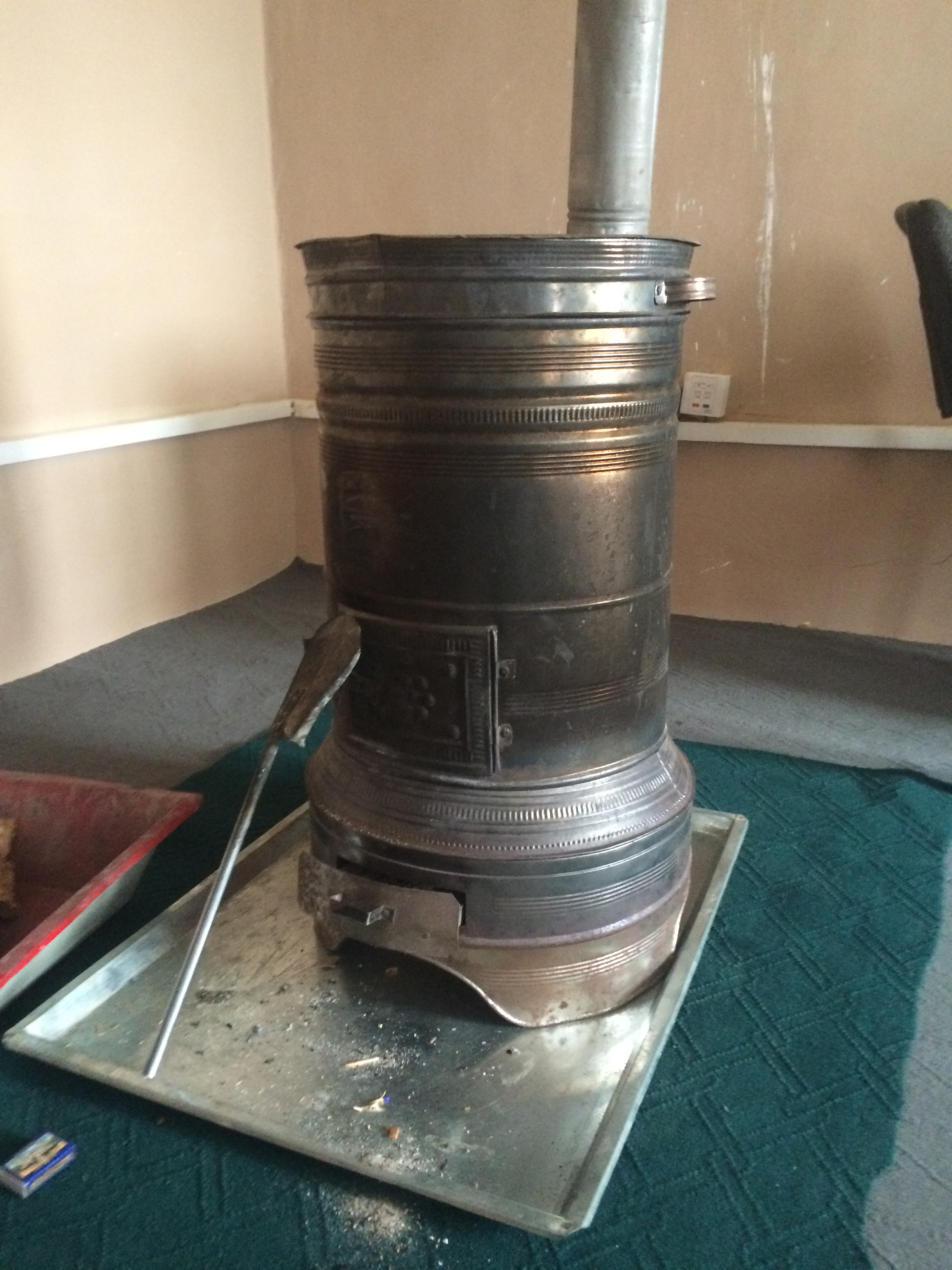
This post begins with a freshly lit bukhari, still snapping and crackling next to me as the sterno burns off and the kindling lights. Yes, I did say sterno. Lighting fuel on offer here is a 1L plastic squeeze bottle filled with either diesel or bright blue sterno, which goes by the name of “Atashza Firelighter Gel.” Squeeze some of either onto your wood, introduce a lit match, and odds are you’ll have a reasonable fire going in a few minutes. Not bad.
Unfortunately, while it sounds lovely to be cozy and warm inside mud walls while the weather does its level best outside, I am often half-smothered by smoke before the heat can build a cozy state. We are currently trying to figure out what the cause is for this unreasonable smokiness, but have yet to come to any conclusions. My suspicion is that it doesn’t help that the pipes of my bukhari (the chimney) go up and then turn at a right angle to head out the wall instead of through the ceiling. They are also fairly small, considering the size of chimney openings we’re used to in woodstoves, and this doesn’t help create an easy draft. A quick search online for “characteristics of good woodstoves” turned up such things as “never put right angles in your pipes” and “make sure the door seals” and “you should feel a draft sucking air in even when a fire is not lit.” Well, my bukhari likes to pour smoke INTO the room when I open the door, which is a thin square of the thin tin the rest of the stove is made of and simply latches shut with a bent piece of the same material. Needless to say, the door is not airtight, the pipes have a right angle, and there’s a draft going the opposite direction it’s supposed to be going. So I’m sitting in the kitchen while I let my room air out and I’ll just put on another layer before I go to bed. Thank goodness we have hot water bottles to snuggle with under the covers!
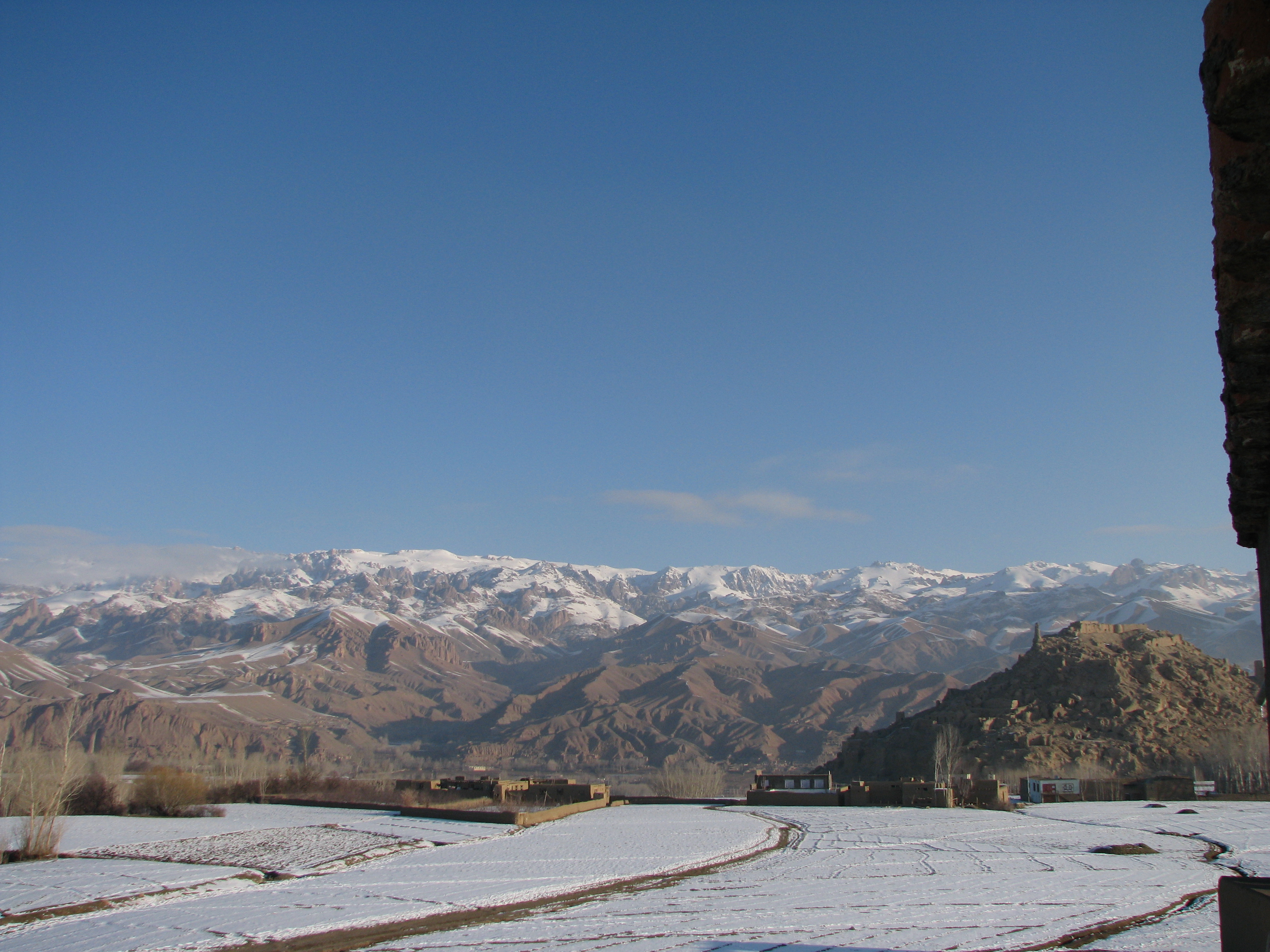
view from my roof
The light on the mountains changes throughout the day, but I think it is never so beautiful as when the temperature is snapping cold and the light is just so that it makes the snowslopes brilliant and the bare patches dark. Such high contrast gives the eyes a lively workout, and catching a glimpse through the space between the buildings as I walk back and forth from office to guesthouse brightens my day (literally).
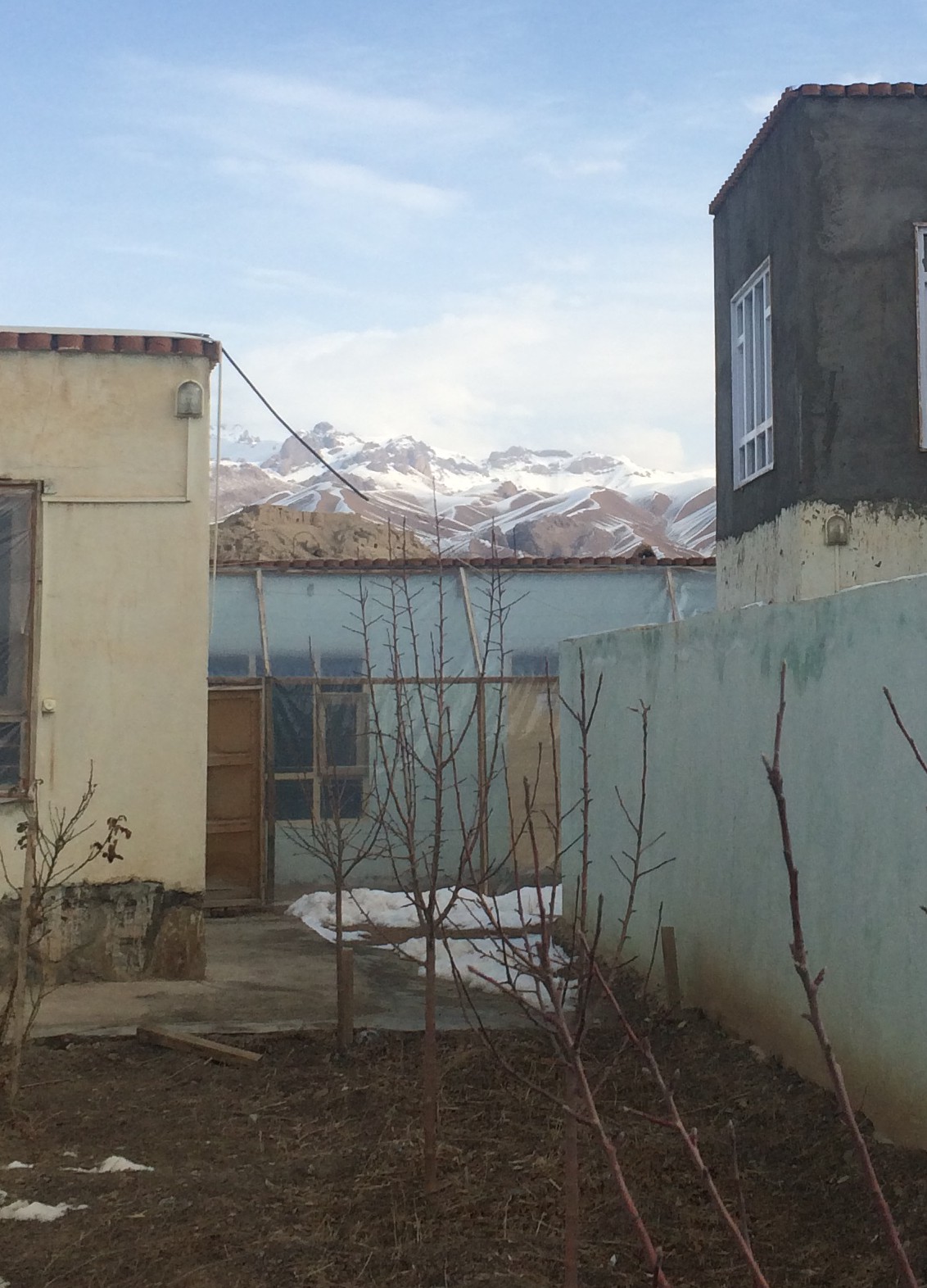
a sliver of mountains
Unless I go up on the roof for a view after work, the slivers of peaks and tops of rolling hills over the walls are all I see of the outside world many days. We do live behind walls. Walls topped with razor wire and watched by guards. Almost everyone in this country lives behind walls (most with gentler tops) because the women need a place where they can be unseen by strange men while they go about their day, the chickens and goats and cows need unsupervised boundaries, and the family needs some privacy in close-built villages.
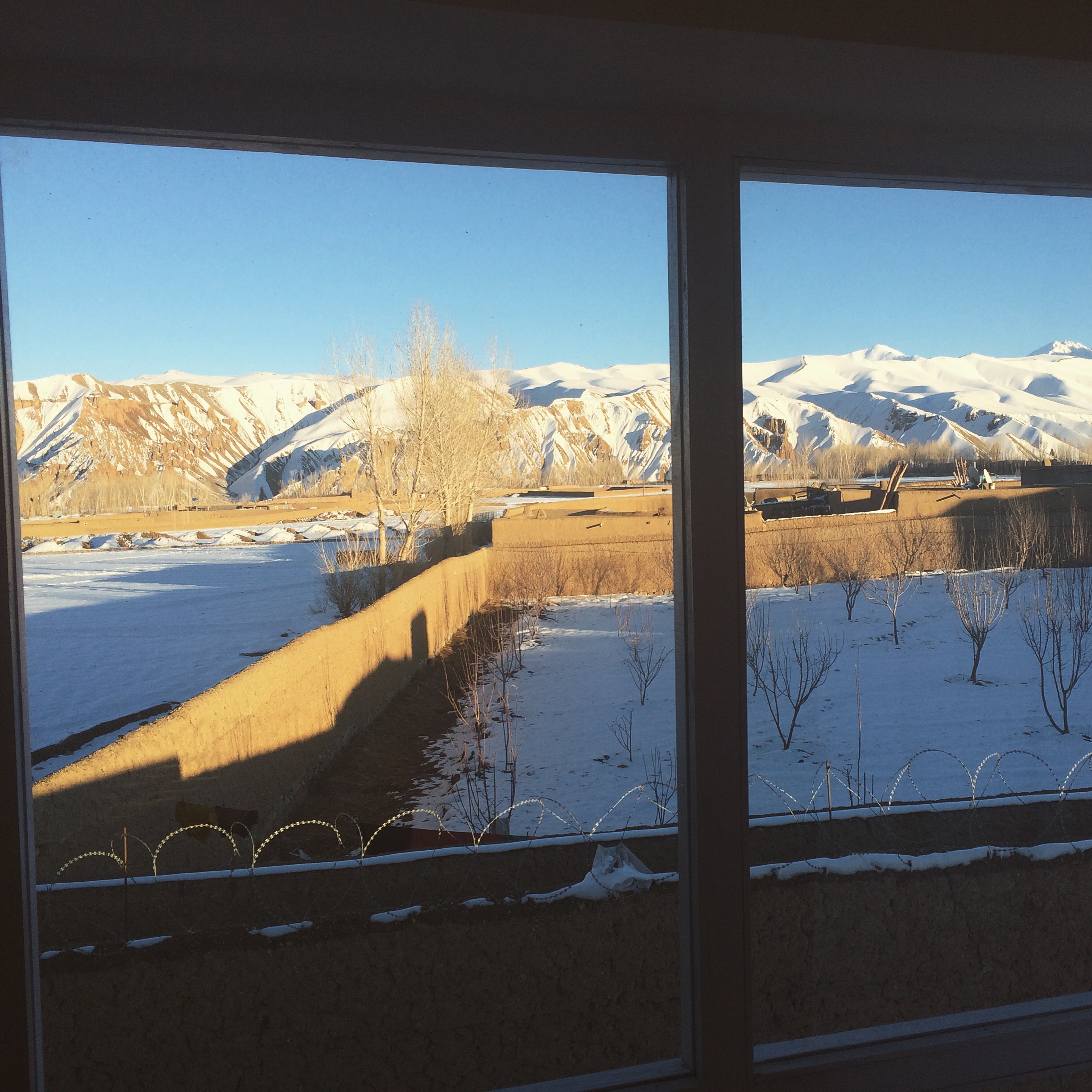
razor wire and walls
Walls aren’t always restricting, of course, and I’m happy to have them here, but this kind of restricted movement is a new sensation. With all the people living and working here and the internet providing an ever fresher perspective on the happenings and doings of global society, it doesn’t ever feel lonely inside these walls (in fact, quite often the opposite). However, while I’m running on the treadmill staring at a blank white wall in front of me with the gas heater giving off carbon monoxide to ease my pain, the walls feel a little more frustrating. I need to start an evening constitutional club for the international staff.
If you think it sounds a little bit like I’m constantly inhaling noxious fumes, you’re not far off. Heating a mud building in the winter with no central heat means burning fuel in each room. This is either wood, as mentioned earlier, coal in the Turkish bukharis, or propane from a rusty tank that is connected to what they call a gas bukhari – a grate with a flame behind it. I don’t know why all the tanks are rusty, but they are. I doubt it’s an essential part of gas bukhari functionality. In any case, we have smoke detectors and carbon monoxide detectors in all our rooms, and I won’t lie and say they don’t go off at least a few times a week, either stating “FIRE” or “CARBON MONOXIDE” (they’re the talking variety of detectors). The woman’s voice is fairly matter-of-fact, however, and the alarm is a steady double-beep at a stately pace, so at least it’s not an unwelcome adrenaline panic every time they alert. I cut holes in the plastic which covers all my windows, so I simply open a window for a bit and my air quality returns to acceptable levels (at least, acceptable according to the imperturbable detector).
This exercise in inhalation tolerance has led me to investigate a bit about indoor air pollution. Apparently, coal is the fuel of choice for most of the poorer areas of the world because it’s cheap and burns for longer than wood.
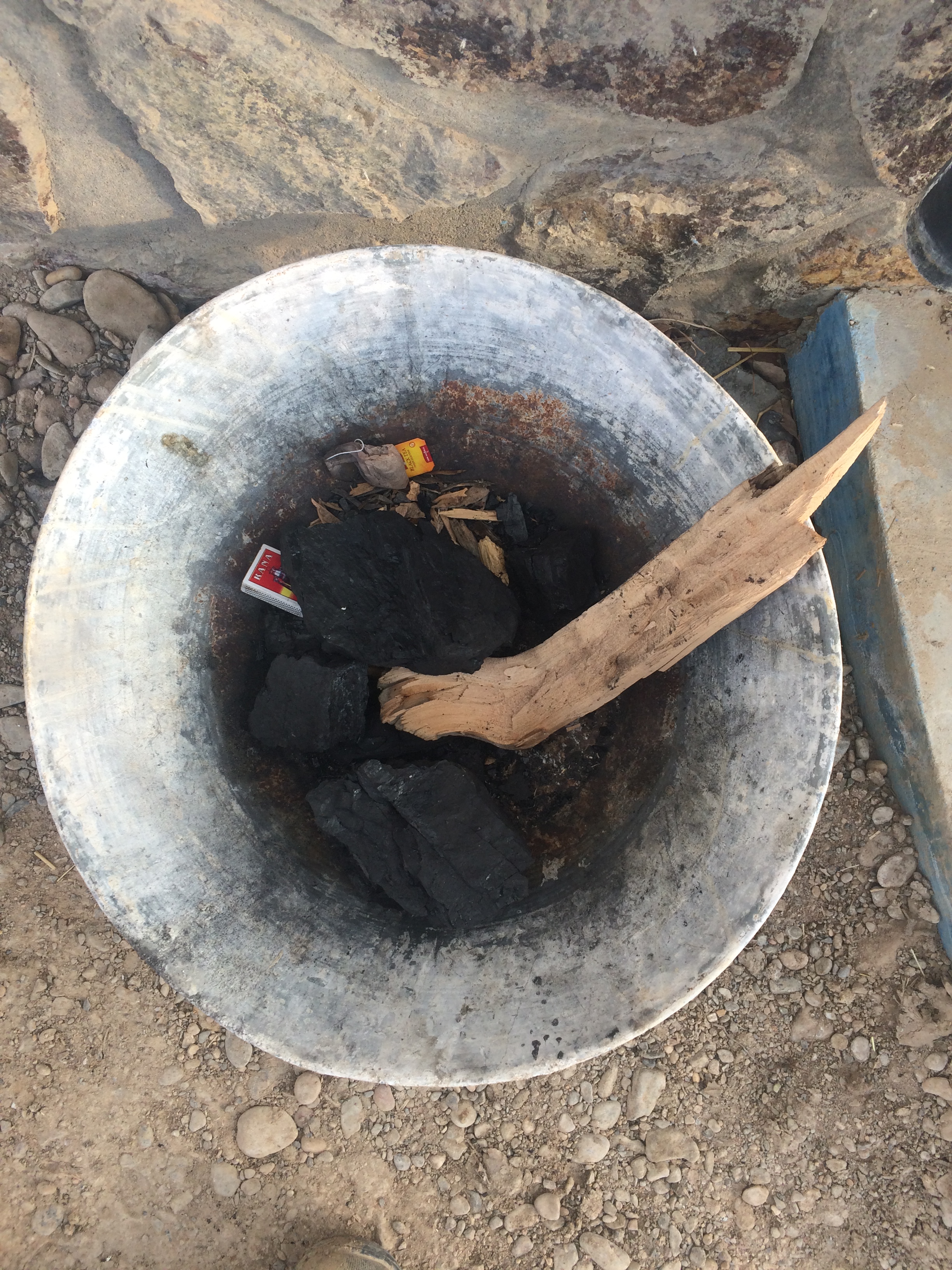
Coal and a stick of wood.
Whatever fuel is used, however, and around here it’s dung, coal, and wood, indoor air pollution disproportionately affects women and young children who spend the most time in the home.¹ ² Many people do not have either efficient stoves or good chimneys, and in bitter cold it is preferable to shut the door and be warm. However, even in warmer weather, people are using these fuels to cook their food and boil water, and the indoor air pollution persists. Somehow moving away from coal is a desirable goal not only because of climate change, but also from a public health perspective. More than half of premature deaths in children under the age of 5 are due to pneumonia from indoor air pollution!¹ Unfortunately, results from projects to increase the use of cleaner burning cookstoves have not been particularly promising so far.³ Proper use, maintenance, and initial adoption are the biggest issues, it seems, and the science of “typical use” air quality benefits is a bit fuzzy. Perhaps it is a problem of approach, rather than technology.
Whew! I apologize if this was quite a long read. Heat in a cold winter is an important subject. My hot water bottle is safely snuggled up under my toes, though, and I have had nary a cold appendage yet under heavy fleece blankets. We are lucky to have enough fuel to heat our dwellings and cook our food, and, as a woman, I am fortunate that smoky rooms has not been my every day reality for the entirety of my life. However, I will be asking for the pipes of my bukhari to be cleaned tomorrow first thing.
Love,
(update: the bukhari pipes were cleaned and my room is now warm and free of smoke!)
¹ http://www.who.int/mediacentre/factsheets/fs292/en/
² http://ije.oxfordjournals.org/content/32/5/847.full
³http://india.blogs.nytimes.com/2012/04/23/the-cookstove-conundrum/
 orientnorth