Traffic in Kabul

I have a backlog of posts on my trip to Band-e-Amir, the remains of the giant Buddha statues, and the UNHAS helicopter ride, but I’m going to dash this one off first since it’s fresh.

My flight out of the country was just cancelled, after waiting for 4.5hours at the airport thinking it was delayed. Theoretically, they’re sending us a plane tomorrow afternoon, so hopefully the process will proceed as intended this time and I’ll be in Dubai tomorrow evening.

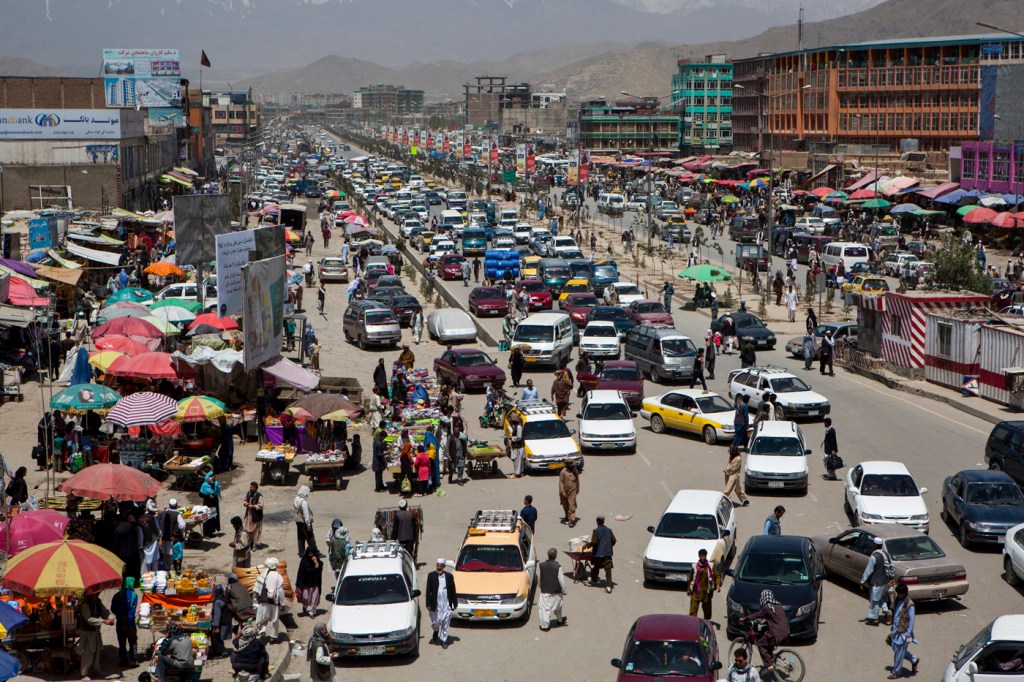
In the meantime, I had a chance to ruminate on the traffic in Kabul on my way back from the airport. First of all, there are no lanes on what could be 3 or 4 lane thoroughfares. These large concrete expanses have treed medians between directions, at least, but are populated on their edges by men and boys with pushcarts of bananas, or other snacks, women in burqas trying to cross all lanes of traffic while carrying or holding the hand of a small child or two, young men crouched together who look like they must be doing drugs of some kind, and old men strolling at remarkably unconcerned paces wearing their large blanket-like scarves and traditional hats. It is chaotic, to say the least.

Thank goodness all major intersections seem to be traffic circles, because right angle intersections would assuredly be mayhem. Cars simply dive where they want to go with such close margins it seems like all drivers here must be aces. They appear to have such complete and utter confidence in the physics and dimensions of their vehicles. Passersby, loitering policemen, women, children, bumpers, barriers, and oncoming traffic are handled with a quick turn and a shifted gear. Nary a backward glance or ruffled feathers have I seen.

Generally, it seems that any moment of hesitation on the part of another driver results in wild passing, with courtesy honks on the way of course, and then inches from another bumper, the driver will spin the wheel and we’re off again. I often don’t feel the need to wear my seatbelt with such driving conditions because it seems like anything that happens would be so catastrophic a seatbelt would do you more harm than good (sorry, Mom!). The faces in other cars come close and then move away again as we weave through traffic.

In any case, we made it back to the guesthouse safely after my flight didn’t go. It was just dusk, so shop lights were coming on and all the naan in the windows was so fresh and brightly lit it seemed like you could smell it. Wish me luck getting out of here tomorrow!

Photo credit: Robert Nickelsberg

A Suzani Kilim (or: My First Time Carpet Shopping)

I hopped the ditch between street and sidewalk and arrived in front of the carpet shop I intended to patronize, only to find the door latched and no one there. This one had been recommended to me because of the friendliness of its owner, variety of its wares, and perhaps most importantly, the guy who owned the shop next door was pushy. Well, with the owner nowhere in sight and not wanting to linger on the sidewalk, off I went to the shop nextdoor.

I generally don’t so much mind pushy shop owners. They want to make a sale, you are presumably a buyer, and I’m sure that their ministrations and insistence must get them positive results or they wouldn’t do it. It is true, if you think about it, that just browsing is so much easier if the person behind the counter hardly looks up from their magazine (or phone) to give you a nod. I’ve had that experience many times in the states, and I do appreciate being left alone when I don’t intent to buy anything. But then, that’s essentially me treating their shop as a no-hassle way of examining the wares, and even when you do that in the biggest shop in the world, the internet, you’re paying for the privilege and whoever is keeping the lights on and the door open. So, like I said, I don’t so much mind being encouraged to buy something if I’m visiting a place where someone is making a living selling things. That logic aside, I’m also relatively unbothered by pushy salespeople. If I want something, I’ll get it. If I don’t, or I don’t like the price, then thank you so much for the help, but I’m leaving now (with a smile, of course). I digress.

IMG_2484I was kindly ushered into the nextdoor carpet shop and as soon as I was inside the shopkeeper draped a dingy lace curtain across the entryway, thereby slowing down any other potential entrants long enough for him to go over and politely tell them what I can only imagine was along the lines of “you have to come back later, this American lady is going to buy a carpet.” Whatever it was he said, no one who came to the doorway was allowed entry while I was inside. Which, really, makes for rather a nice shopping experience, particularly when you’re buying something which must first be spread out across the available floorspace. So, of course, the first thing that happens is the man starts spreading out carpets. He began with the fanciest, of course, the silk carpets from who knows where, that are certainly beautiful but not what I was in the market for. To be honest, I didn’t really know what I was in the market for, so I needed to see all the possibilities before I could make a choice.
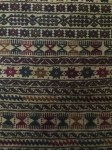
IMG_2482Silk carpets, wool carpets, old carpets (used), kilims, small, large, runner style, prayer rug, and room size. This man only had two 4 foot stacks, a few on the floor, and rolled carpets along one small wall in stock. The smaller selection was part of the reason I wanted to go to the other shop, but I thought I might as well take a look here since my colleagues were still grocery shopping across the way and I didn’t have anything else to do. Luckily, I was immediately drawn to the kilims this man had, and I saw three or four before being absolutely certain I knew which one I wanted. I wasn’t particularly in the mood to prevaricate for hours over a fancier carpet (I’ll be doing that sometime in the next few days instead) though I was also partial to a lovely big wool carpet he had thrown out in view.
The only evidence of pushiness I saw was that when my desires were clear he said “how much for two?” about 30 times and didn’t know enough (or let on that he did) English to understand my hesitating words. Either way, I didn’t want them both, but I wanted to look around a little more first, so I did, and he gave up at some point and went and talked to a woman in a burka who stopped by the doorway with her teenage son. I have no idea what their conversation was about, but I would feel terrible if he had turned her away just so I could let my eyes drift over old silver jewelry, palm-sized chunks of raw lapis lazuli, old bowls, and the like. Nothing I have heard about the wearing of the blue burka with mesh for an eye-window has indicated that it is in any way comfortable, and I hope I didn’t prolong her shopping trip unintentionally. Perhaps she was a relative of the shopkeeper and they were just passing news.

Either way, she soon left and I tried to bargain 15% off my price, but ended up taking a 10% discount and a pair of earrings. I could’ve tried harder and stayed longer, but I was getting a price I’d been prepared for, and so I was satisfied. He rolled the kilim up for me, ensconced it in two plastic bags, I gave him crisp, new, American dollars brought from the states, and left to meet my colleagues.
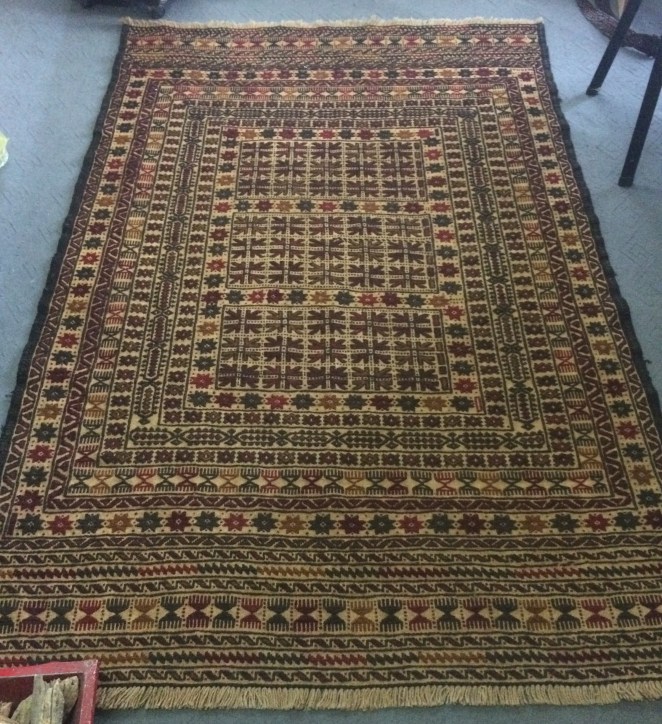
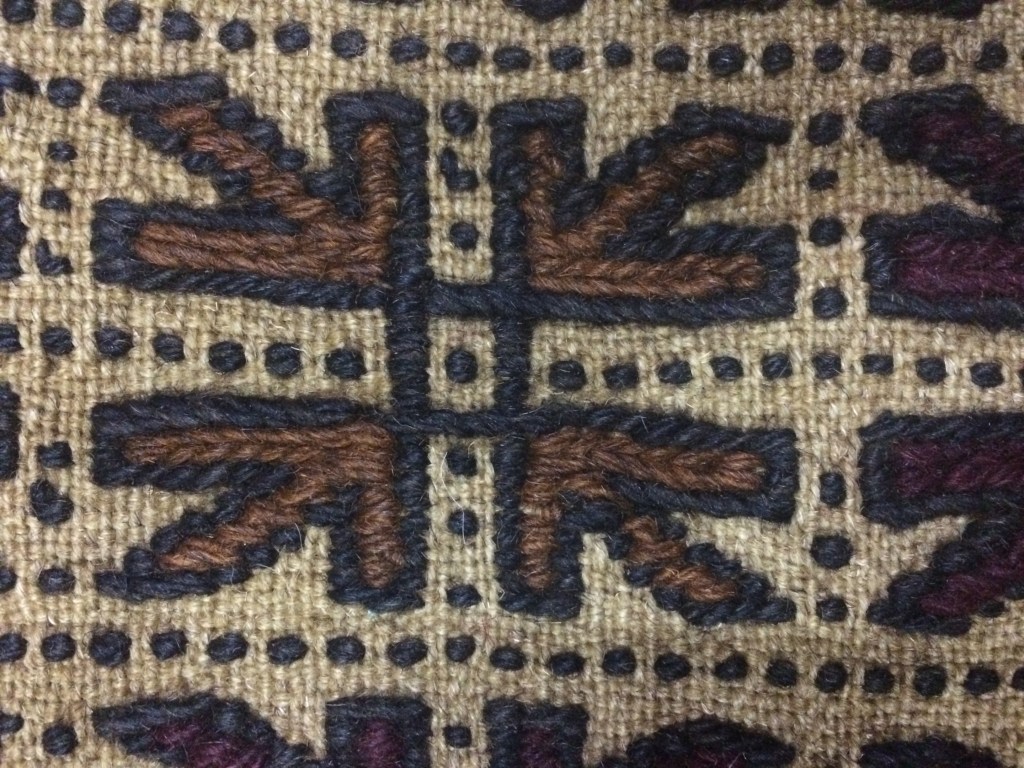
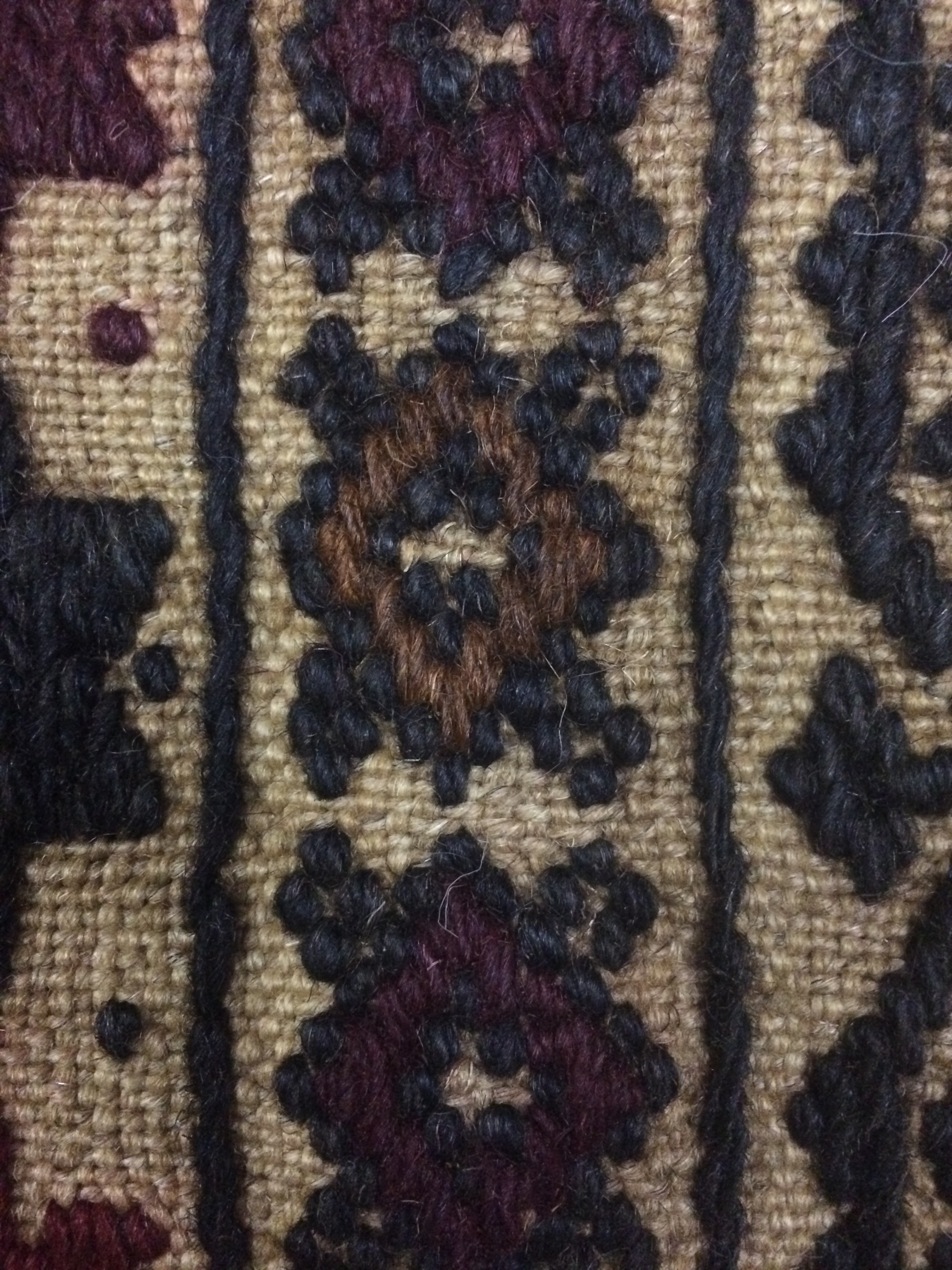
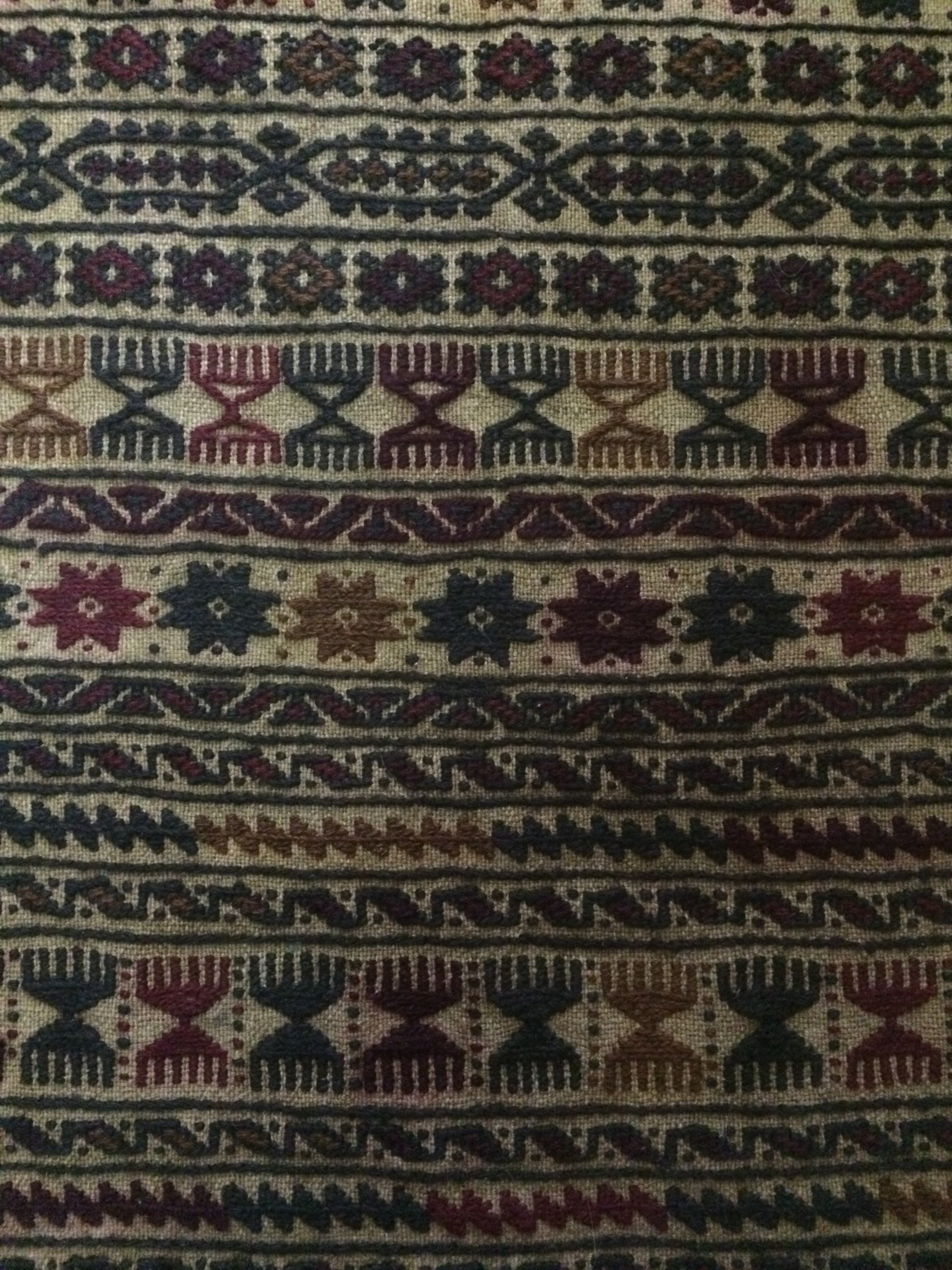
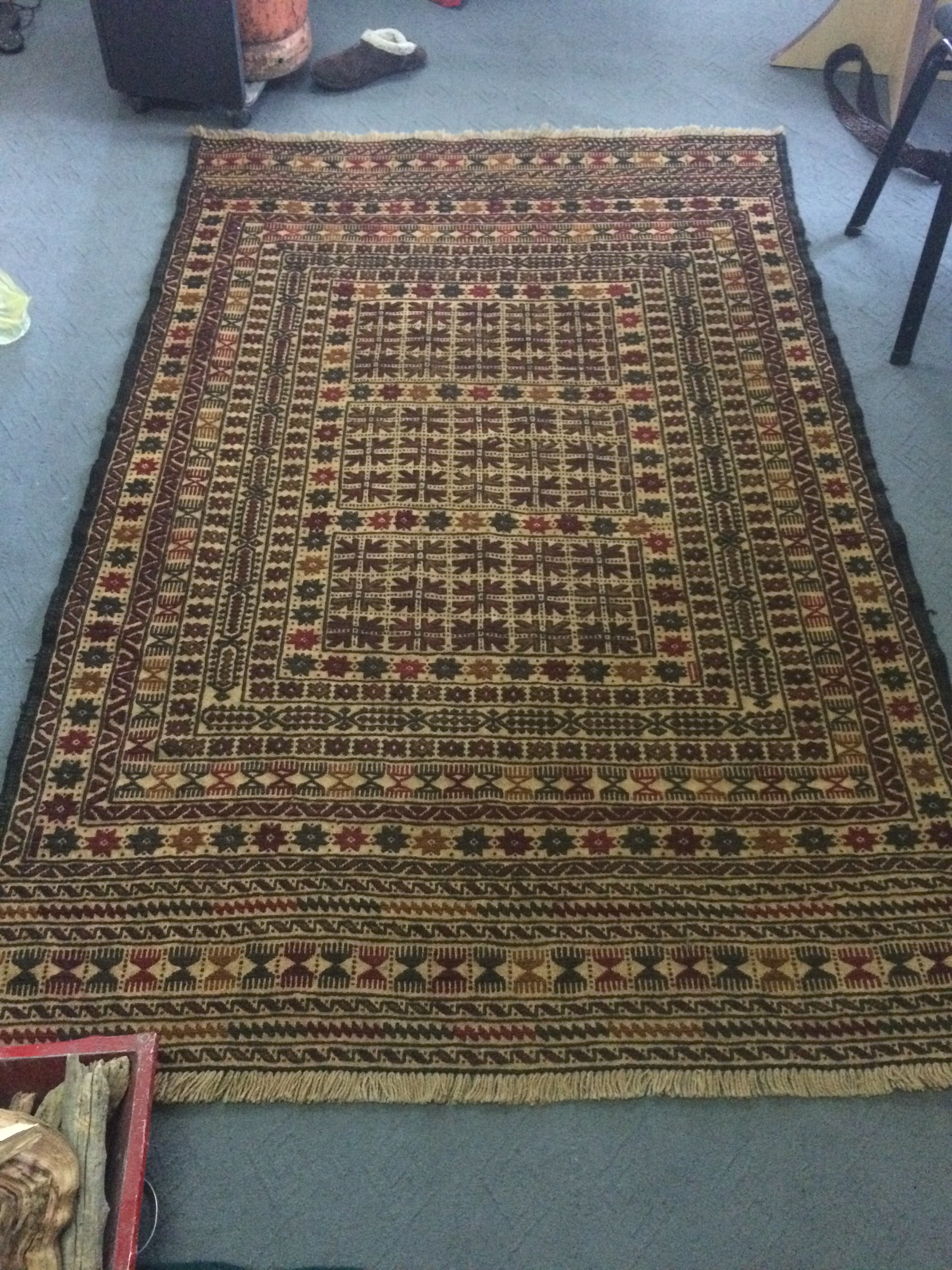
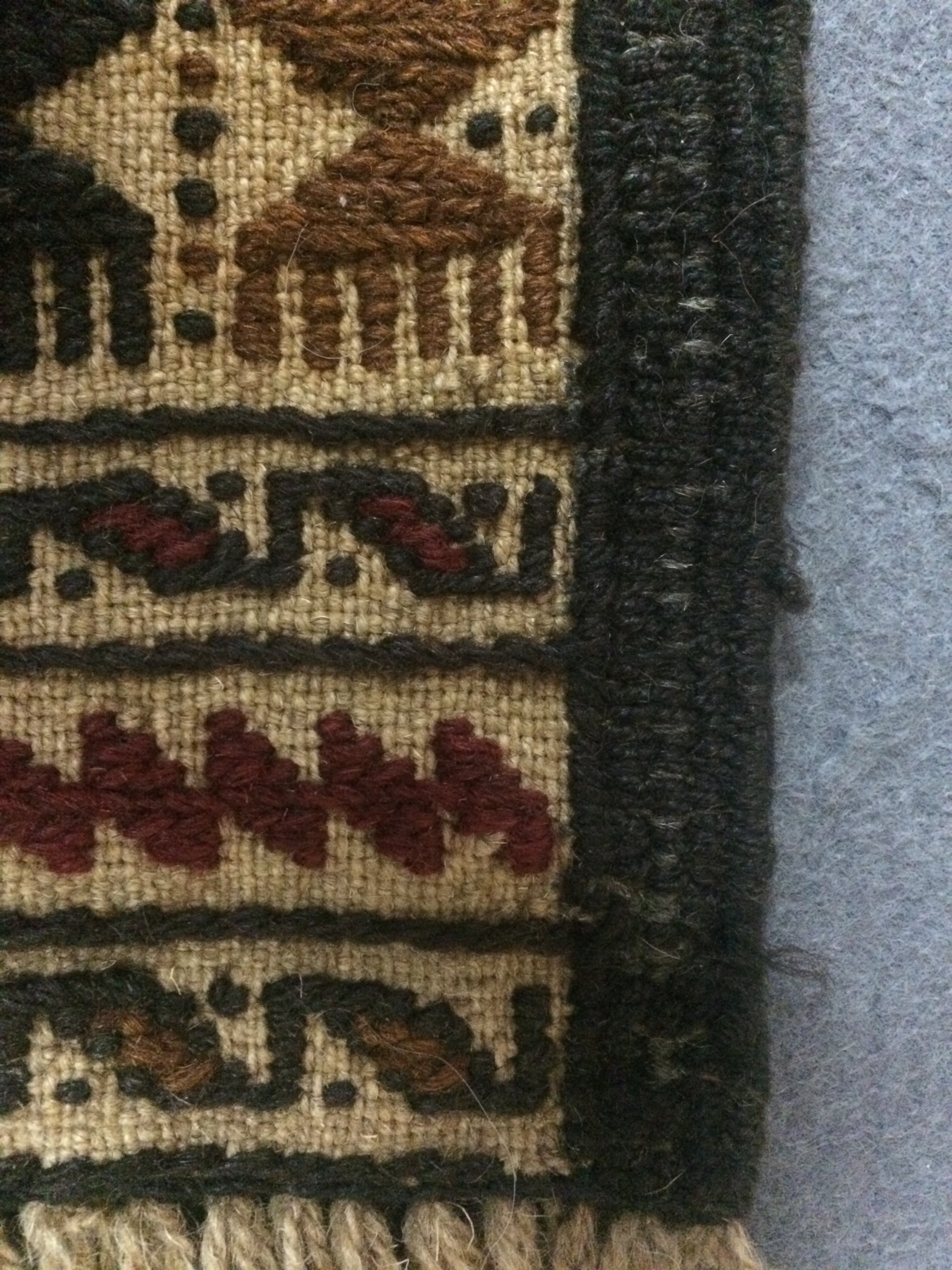
IMG_2481And I LOVE my kilim! I think it’s beautiful. It’s spread out here on the floor of my room next to me as I write this. Kilim are differently made than carpets. Carpets are composed of tiny little pieces of yarn knotted onto the background woven textile. Kilims, on the other hand, are flat woven and the pattern is produced by the weft strands (horizontal, colored), with the warp strands (vertical) hidden by pulling the weft very tightly.¹ ² However, the kilim I now have was embroidered after the original textile was woven, creating the pattern through needle and thread. I believe this is what is called a “suzani kilim.”³
IMG_2486

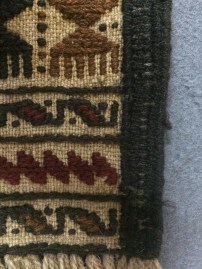
Hand embroidered. As a knitter, I know what it’s like to use what I’d say were small needles, and how the inches seem to be stuck in molasses rather than flying off the needles like water. This entire kilim, which must be about 4’ x 6’, is almost completely covered in stitched patterns. The back side shows the knots made after each color and pattern were completed. To me, this is an unbelievable amount of work. Wielding a needle and thread for that long, and in such minute detail, makes me shudder.
I’m sure it would take these artists at least 50x less time to make than me, who can barely stitch a hole without it looking like a Frankenstein scar, but no matter how good you are, this must have taken quite a long time to make. I would happily have paid more if I knew the profits were going to the source and not to the middle-man.

A quick side-note before I signoff: I wish I could share more photos of the people and the shopping experience, but it’s not entirely polite to take those kinds of pictures here. I am particularly not allowed to take photos of women – any women. Back home, we take pictures of everything; here, that’s not the case. When you’re taking photos you’re very much a tourist and, depending on the situation, I feel uncomfortable making someone so clearly an object. I had that experience once, where a tourist wanted to take a picture of me, and then WITH me, and it did not leave me with warm feelings towards the tourist, and by extension, their tour group and country/culture of origin. I know we are all individuals and one rude tourist is not the same as another, but the association remains and is hardly in our control. In any case, I’m sorry not to be sharing pictures of people right now. Maybe next time!

Love,

Mila
Heat

IMG_2398

bukhari

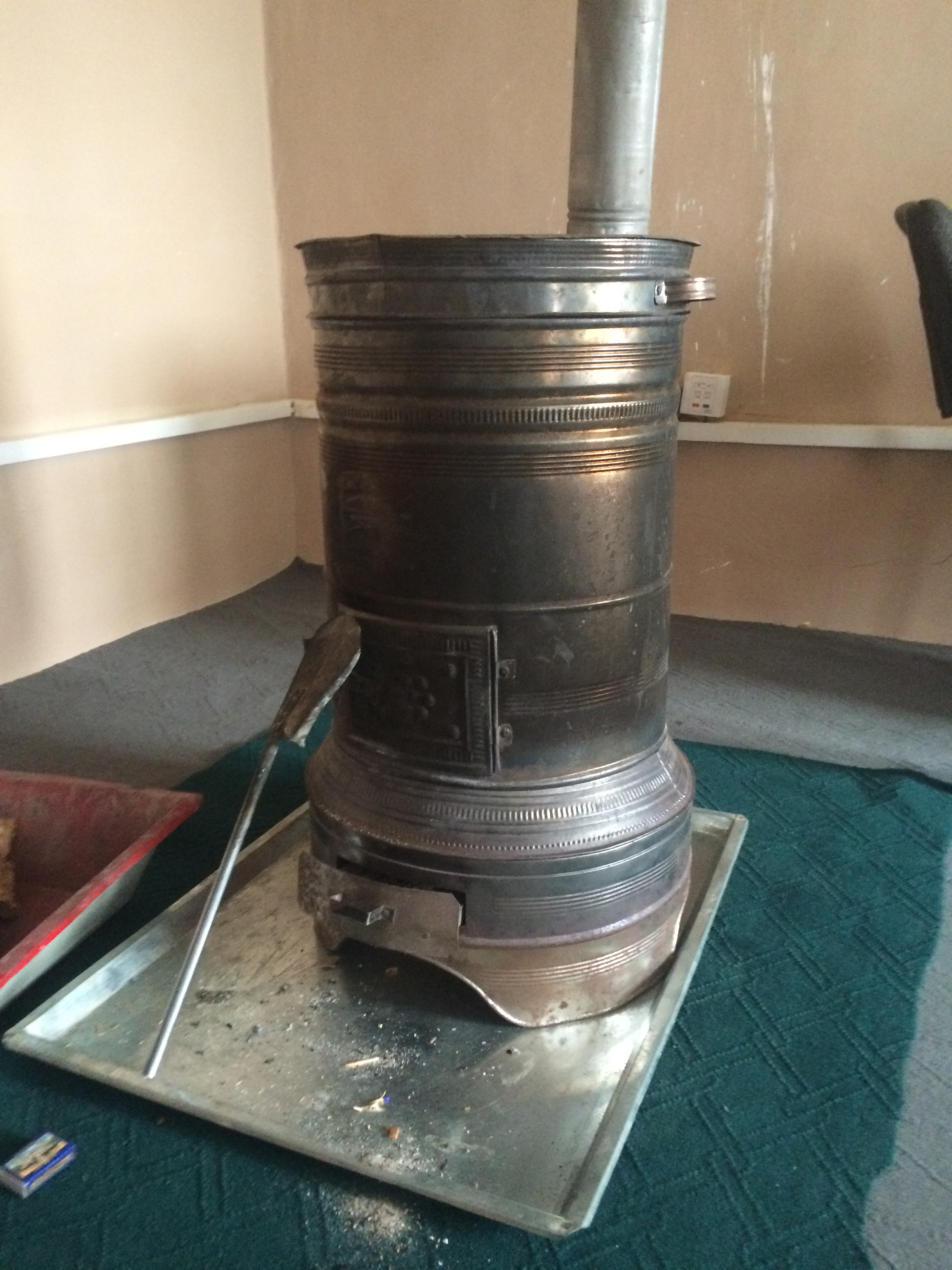
This post begins with a freshly lit bukhari, still snapping and crackling next to me as the sterno burns off and the kindling lights. Yes, I did say sterno. Lighting fuel on offer here is a 1L plastic squeeze bottle filled with either diesel or bright blue sterno, which goes by the name of “Atashza Firelighter Gel.” Squeeze some of either onto your wood, introduce a lit match, and odds are you’ll have a reasonable fire going in a few minutes. Not bad.

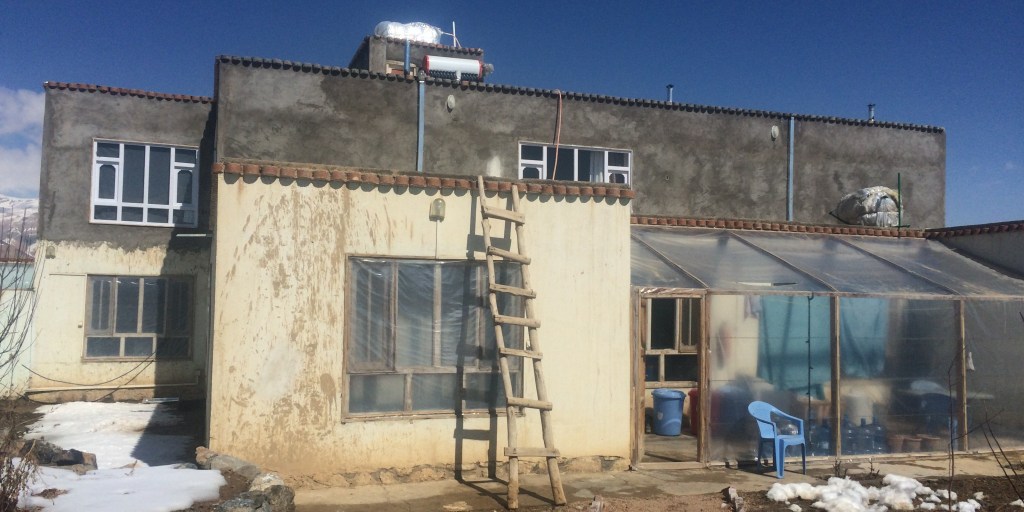
Unfortunately, while it sounds lovely to be cozy and warm inside mud walls while the weather does its level best outside, I am often half-smothered by smoke before the heat can build a cozy state. We are currently trying to figure out what the cause is for this unreasonable smokiness, but have yet to come to any conclusions. My suspicion is that it doesn’t help that the pipes of my bukhari (the chimney) go up and then turn at a right angle to head out the wall instead of through the ceiling. They are also fairly small, considering the size of chimney openings we’re used to in woodstoves, and this doesn’t help create an easy draft. A quick search online for “characteristics of good woodstoves” turned up such things as “never put right angles in your pipes” and “make sure the door seals” and “you should feel a draft sucking air in even when a fire is not lit.” Well, my bukhari likes to pour smoke INTO the room when I open the door, which is a thin square of the thin tin the rest of the stove is made of and simply latches shut with a bent piece of the same material. Needless to say, the door is not airtight, the pipes have a right angle, and there’s a draft going the opposite direction it’s supposed to be going. So I’m sitting in the kitchen while I let my room air out and I’ll just put on another layer before I go to bed. Thank goodness we have hot water bottles to snuggle with under the covers!

IMG_4418

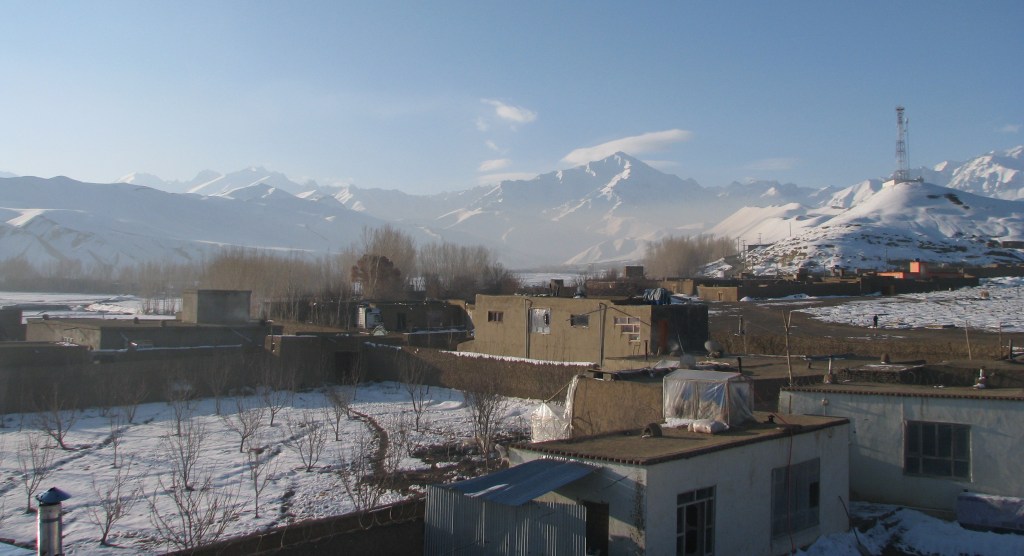
view from my roof

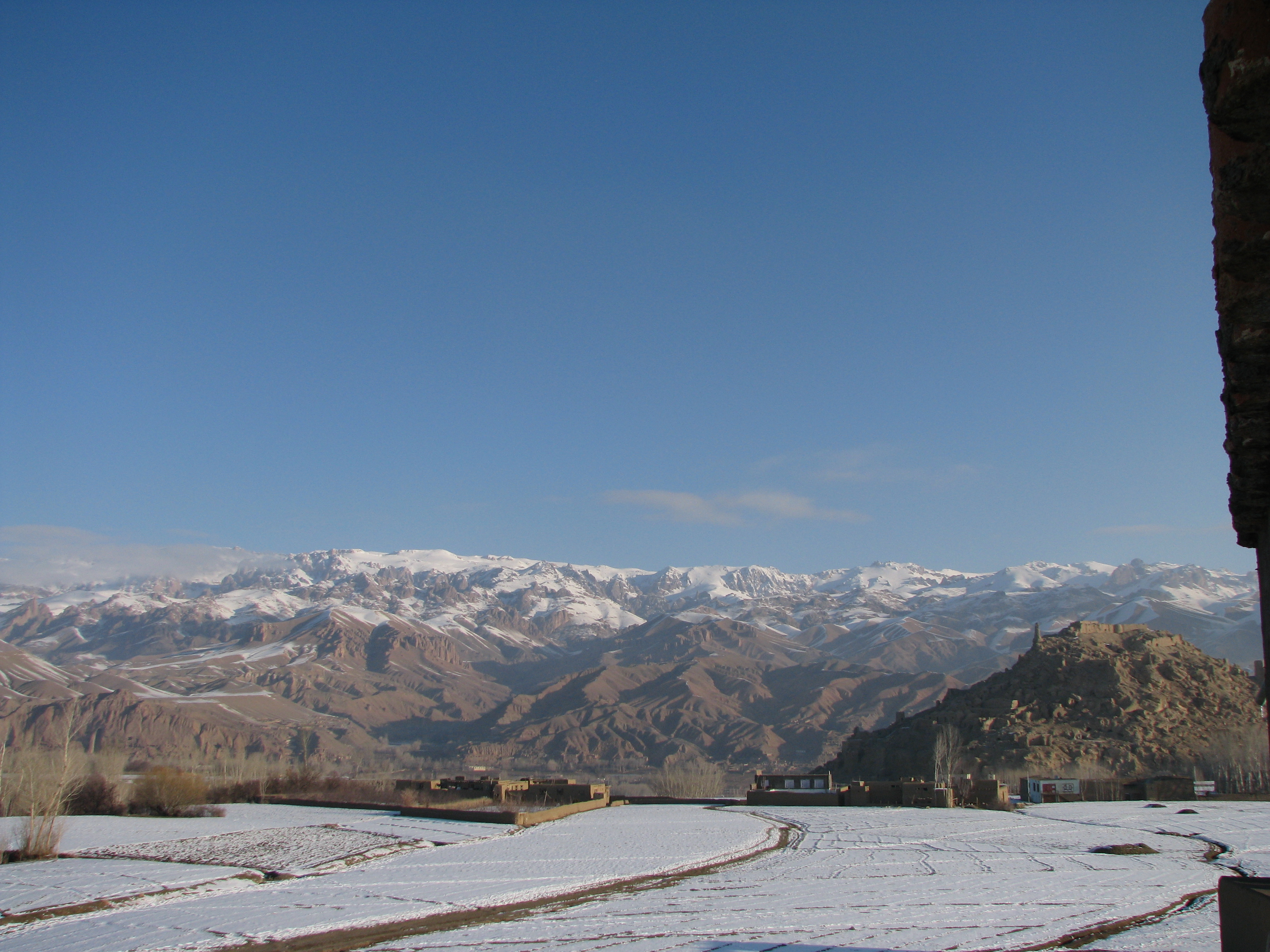
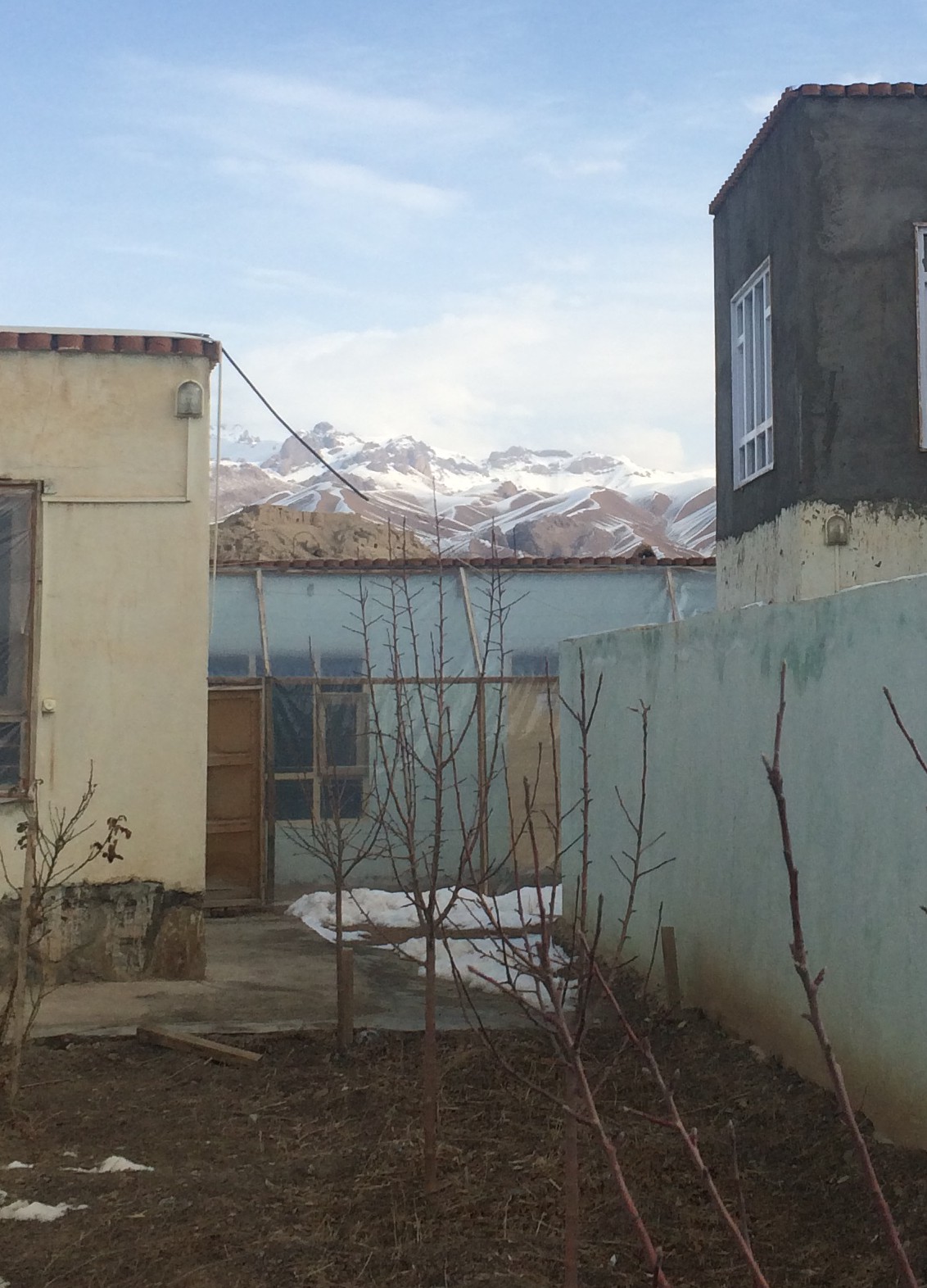
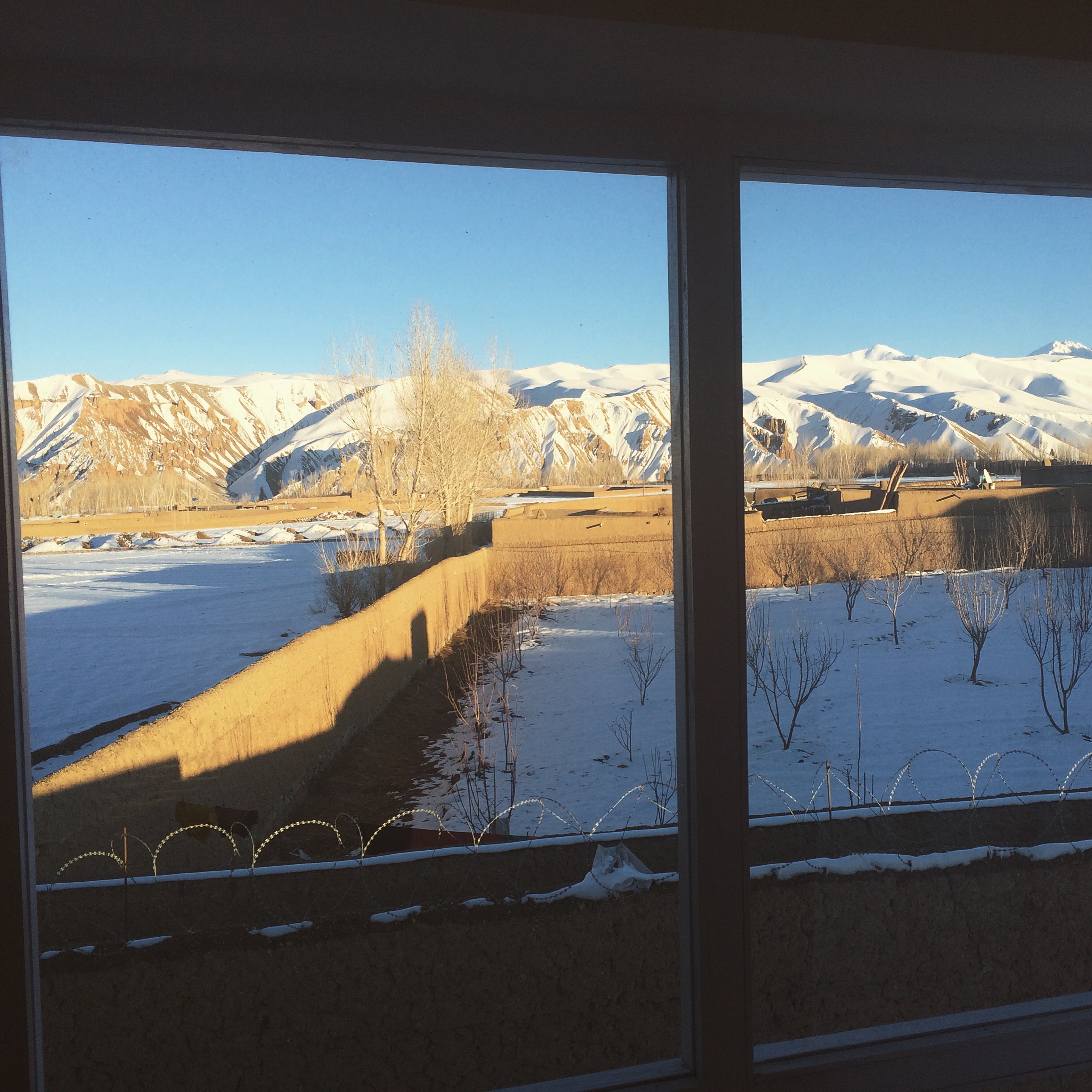
The light on the mountains changes throughout the day, but I think it is never so beautiful as when the temperature is snapping cold and the light is just so that it makes the snowslopes brilliant and the bare patches dark. Such high contrast gives the eyes a lively workout, and catching a glimpse through the space between the buildings as I walk back and forth from office to guesthouse brightens my day (literally).

IMG_2436

a sliver of mountains

Unless I go up on the roof for a view after work, the slivers of peaks and tops of rolling hills over the walls are all I see of the outside world many days. We do live behind walls. Walls topped with razor wire and watched by guards. Almost everyone in this country lives behind walls (most with gentler tops) because the women need a place where they can be unseen by strange men while they go about their day, the chickens and goats and cows need unsupervised boundaries, and the family needs some privacy in close-built villages.

razor wire and walls

razor wire and walls

Walls aren’t always restricting, of course, and I’m happy to have them here, but this kind of restricted movement is a new sensation. With all the people living and working here and the internet providing an ever fresher perspective on the happenings and doings of global society, it doesn’t ever feel lonely inside these walls (in fact, quite often the opposite). However, while I’m running on the treadmill staring at a blank white wall in front of me with the gas heater giving off carbon monoxide to ease my pain, the walls feel a little more frustrating. I need to start an evening constitutional club for the international staff.

If you think it sounds a little bit like I’m constantly inhaling noxious fumes, you’re not far off. Heating a mud building in the winter with no central heat means burning fuel in each room. This is either wood, as mentioned earlier, coal in the Turkish bukharis, or propane from a rusty tank that is connected to what they call a gas bukhari – a grate with a flame behind it. I don’t know why all the tanks are rusty, but they are. I doubt it’s an essential part of gas bukhari functionality. In any case, we have smoke detectors and carbon monoxide detectors in all our rooms, and I won’t lie and say they don’t go off at least a few times a week, either stating “FIRE” or “CARBON MONOXIDE” (they’re the talking variety of detectors). The woman’s voice is fairly matter-of-fact, however, and the alarm is a steady double-beep at a stately pace, so at least it’s not an unwelcome adrenaline panic every time they alert. I cut holes in the plastic which covers all my windows, so I simply open a window for a bit and my air quality returns to acceptable levels (at least, acceptable according to the imperturbable detector).

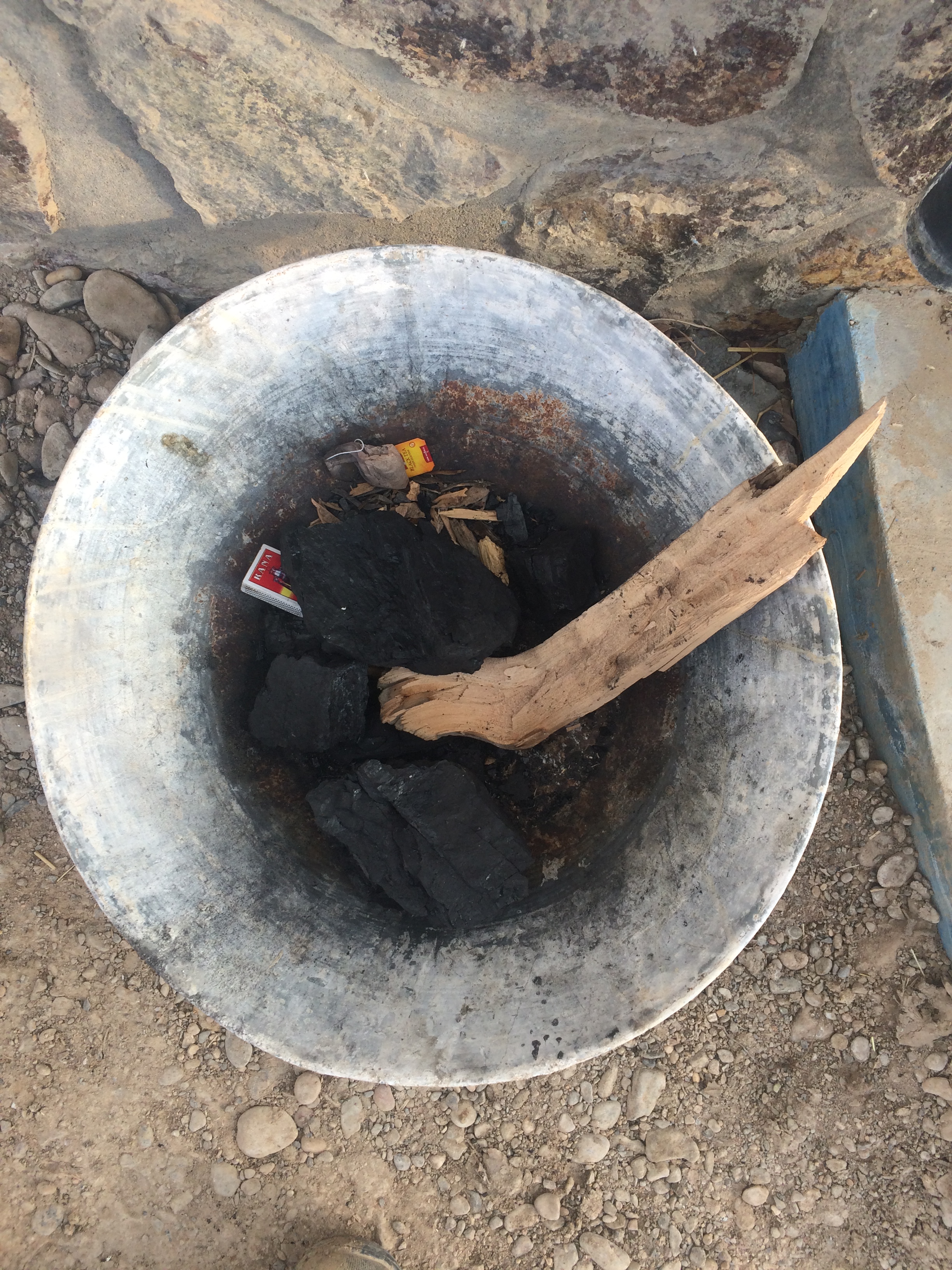
This exercise in inhalation tolerance has led me to investigate a bit about indoor air pollution. Apparently, coal is the fuel of choice for most of the poorer areas of the world because it’s cheap and burns for longer than wood.

Coal and a stick of wood.

Coal and a stick of wood.

Whatever fuel is used, however, and around here it’s dung, coal, and wood, indoor air pollution disproportionately affects women and young children who spend the most time in the home.¹ ² Many people do not have either efficient stoves or good chimneys, and in bitter cold it is preferable to shut the door and be warm. However, even in warmer weather, people are using these fuels to cook their food and boil water, and the indoor air pollution persists. Somehow moving away from coal is a desirable goal not only because of climate change, but also from a public health perspective. More than half of premature deaths in children under the age of 5 are due to pneumonia from indoor air pollution!¹ Unfortunately, results from projects to increase the use of cleaner burning cookstoves have not been particularly promising so far.³ Proper use, maintenance, and initial adoption are the biggest issues, it seems, and the science of “typical use” air quality benefits is a bit fuzzy. Perhaps it is a problem of approach, rather than technology.

Whew! I apologize if this was quite a long read. Heat in a cold winter is an important subject. My hot water bottle is safely snuggled up under my toes, though, and I have had nary a cold appendage yet under heavy fleece blankets. We are lucky to have enough fuel to heat our dwellings and cook our food, and, as a woman, I am fortunate that smoky rooms has not been my every day reality for the entirety of my life. However, I will be asking for the pipes of my bukhari to be cleaned tomorrow first thing.

Love,

Mila


(update: the bukhari pipes were cleaned and my room is now warm and free of smoke!)

¹ http://www.who.int/mediacentre/factsheets/fs292/en/

² http://ije.oxfordjournals.org/content/32/5/847.full

³http://india.blogs.nytimes.com/2012/04/23/the-cookstove-conundrum/

Bukhari Nights

Night has fallen and everything is quiet except for a dog barking in the distance and the ticks of my bukhari* as it cools along with the coals slowly smoking inside. There are no cars to hear, because the strip of paved road is on the other side of the valley near the airport, and there’s no reason to drive around after dark here anyway. It’s also cold, below freezing I believe, and so everyone is inside. There’s still some snow lingering in thin lines on the north sides of the foothills and the higher mountains are completely blanketed. We’re at 2800m here in Bamiyan, Afghanistan, so spring is creeping in rather slowly. I hear spring has sprung with a vengeance back in California; despite the drought, or maybe because of it, the flowering plants are donning their finest and batting their petals at the pollinators.

Even if it were a good temperature for blooming, I’ve seen little evidence of plant life here so far except for the stands of something akin to aspen growing on the banks of the streams. The only birds I’ve noticed are corvids – magpies, crows, and ravens – and I can’t say I’ve actually heard a bird song yet. But maybe this is a migratory area and the songbirds will fly in with the spring winds! One can only hope. I’m in luck regardless because I love the corvids, and ravens have a wonderful knack for living in grand places. I’ve heard their quorks from Death Valley to the high valleys of the Sierras and the steppes of Mongolia. I’ll file that thought away for another post on ravens.

It’s comforting knowing the mountains are out there in the dark, covered in snow. I’ve been watching the clouds roll up and tease their way along the ridges, trying to make it over but not quite managing. To the southeast, there are the tall and jagged peaks of the Hindu Kush, the high spine running through Afghanistan and Pakistan that marks the southern end of the Himalayas. The highest peaks around here are up to 6,000m (19,700ft!), though I couldn’t point out to you which ones they are. Unfortunately, I seem to have landed in a group of non-mountain folks, and no one is interested in exploring with me. Security protocols state we must always be with another international staff member or a few national staff, so I’m plumb out of luck at the moment. But the adventures out there are myriad, and, perhaps, a bit on the dangerous side for more reasons than mountain weather.

Bamiyan sits on a stepped plain in the midst of the mountains. There are foothills on all sides, most with natural caves staring blank and dark from reddish sandstone. The giant Buddhas were here, and their empty niches are the most impressive openings in the walls. Apparently, thousands of years ago the honeycomb of caves were used by hundreds of Buddhist monks as living quarters, meditation caves, and guest rooms for weary travelers. Some of the caves at the edges of the cliffs are still inhabited, but the rest has been designated a UNESCO World Heritage site. I hope to go next weekend. At the Buddhas, they sell tickets for another historical tourist attraction here: the City of Screams.This is a large-ish hill situated above the bazaar and at the other edge of the wheatfields which abut our compounds’ outer walls. The story goes that there was a conquering warlord living there in the fortress built on top (you can still see much of the ruins) and he had a daughter with an eye for the local men. Apparently, one night she arranged a tryst with a particularly handsome fellow and when she went down to open the back door a rebel force swept in and killed everyone inside, taking back the hill from the conquerer and simultaneously earning it the name “City of Screams.” I don’t think it’s been inhabited since then.

Even the dog has stopped barking at this point; it’s really getting late. I hope this is a satisfying taste of Bamiyan so far. More to come shortly!

Love,
Mila

*a bukhari is like a wood stove made of some much much thinner metal and round, with two vents that lead to a pipe. mine burns wood, but the more modern ones burn coal.